Search This Blog

Showing posts with label South Australia. Show all posts

Tuesday, 16 October 2012

Mitolo Serpico Cabernet Sauvignon 2008 McLaren Vale Australia

Mitolo Serpico Cabernet Sauvignon 2008 from McLaren Vale in South Australia contains 10% Syrah in the blend, with the rest being Cabernet Sauvignon, and was made in the 'Amarone method' from grapes picked at around 12.5% potential alcohol and then semi-dried slowly until 70% of their original weight, finishing at around 15% potential alcohol. They are  then fermented on their skins for 2 weeks.  It is made by  winemaker Ben Glaetzer and Frank Mitolo ( who is Italian hence the Amarone method). The grapes come from a grower in Woolunga and are from a single block  at the southern end of the McLaren Vale which were picked early and so avoided the excessive heat  in 2008.
It was matured for 9 months in 100% new barriques, 90% French and this produces a rich, concentrated complex wine with alot to offer.
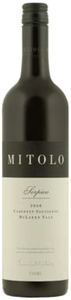
It has a deep, deep ruby core and abundant concentrated aromas of black berries, mint, leather,  olive oil and sweet spices - very tempting. On tasting, it is vibrant on the palate, sweet black fruits overlaid with sweet spices, cedar box smokiness and minty olive oil, all this is intertwined with intense dried fruit flavours which are redolent of Christmas and all things spicey . The texture is rich and silky, the structural tannins which enrobe the wine, are ripe, savoury and powerful and add another dimension to its structure. The succulent fruit is concentrated and fresh with a vibrancy that suggests it is only just beginning its journey.
I am sure at this point you can tell - I liked this wine, it was one to sit by a warm fire on a rainy Sunday - or eat with a lovely meal - and you can buy it from Slurp at a price of £29.95 or from Paul Adams Wines at £25, good value for this quality - Enjoy!

Score : 94


McLaren Vale is one of South Australia's oldest and most picturesque regions, nestled between the Mount Lofty Ranges and the white, sandy beaches of the Gulf of St Vincent. It has rolling vineyards, a rugged coastline and a charming collective of villages including Willunga, Clarendon, Kangarilla, Sellicks, Port Willunga, McLaren Flat and the township of McLaren Vale.


There is substantial climatic variation throughout McLaren Vale, due to varying exposure to the cooling influence of the nearby ocean. There are also significant changes in altitude as the region merges with the Adelaide Hills to the East and the Fleurieu Peninsula to the South. Summer rainfall is low, and supplementary irrigation is considered essential. Site selection and the marriage of site to variety are all-important; Shiraz, Cabernet Sauvignon, Grenache, Semillon, Sauvignon Blanc and Chardonnay all do very well in the appropriate location and with the wide variety of soils - red-brown sandy loams, grey-brown loamy sands with yellow clay subsoils interspersed with lime, distinctly sandy soils and patches of red or black friable loams are all to be found and again the grape to soil mix is all important.


Monday, 15 October 2012

Mount Horrocks Cabernet Sauvignon 2009 Clare Valley South Australia

Mount Horrocks Cabernet Sauvignon 2009 from the Polish Hill River sub-region of the Clare Valley  in Southern Australia is made by proprietor/Winemaker Stephanie Toole and she was at the tasting - vibrant lady who maintains the quality of the wines by restricting the output / yield. Her aim is for the wine to speak for itself and tell its own story about the terroir. Stephanie describes her wines as ‘essentially hand made food wines with an emphasis on structure as well as generous fruit flavours’.
All the grapes are 100% estate grown from three separate vineyard sites that have been managed using sustainable natural farming and organic practices totalling nearly 10 hectares in the Clare Valley. The grapes are hand-picked and then fermented in stainless steel fermenters, pumped over five times a day followed by gentle pressing then the wine was matured in barriques for 18 months, of which 35% was new French oak.
Ruby and a hint of garnet at the rim are the colours to describe this wine, the big aromas redolent of blackberries, olive oil and cedar box smokiness, the flavours follow accordingly with additional savoury ripe tannins of a slightly drying nature, and the wine had a silky sumptous texture. Very persistent finish with a warm end, juicy all the way through. This is a stylish elegant Cabernet Sauvignon which has a typical New World character - enrobing and luxurious.
Available from Aitken Wines at a cost of £23 .
Score : 90


The Clare Valley
The Clare Valley is less than a two-hour drive from Adelaide and is considered one of the most picturesque wine regions in South Australia. James Halliday ( Wine Companion ) described the Clare Valley as one of Australia’s most beautiful wine-producing regions where Hills fold in on themselves, streamlets meander and lines of gumtrees are forever twisting through pockets of vineyards and around old stone houses. Sounds stunning!

Situated in the northern Mt Lofty Ranges, South Australia’s Clare Valley was settled in the late 1830s, with the first vineyards planted and wines produced in the early 1840s. The same features that make the Clare Valley inherently beautiful are also the foundation of Clare’s famed vineyards. The climate features a warm to hot summer where cool afternoon breezes are the key and play a major role in slowing down the ripening process, but cooling afternoon breezes play a major role in slowing down the ripening process. altitude and position within the Valley, as well as aspect, lead to considerable variations in individual site climate. The climate is moderately Continental, with cool to cold nights and warm to hot summer days. The rainfall is winter-spring dominant, while relatively low humidity (and summer rainfall) means a low incidence of fungal disease. Hence some of Australia's finest Riesling is grown in the Clare Valley, and the region also produces many other wine styles, including Cabernet Sauvignon and Shiraz.

Wynns Cabernet Sauvignon 2007 Coonawarra Australia

Wynns Cabernet Sauvignon 2007 from Coonawarra in Southern Australia was  the first winery to be established in the Coonawarra, by John Riddoch in 1896. This vintage is  the lowest yielding of the 52 vintages that this wine has been made for,  due to frost, also the vine age averages 32 years. This was a difficult year for the winemaker, Sue Hodder.
The wine was  in matured in a mix of American and French mostly used oak for 15 months with spice, cedar box and smoke all playing their part on the nose and palate.
The deep ruby core has bouncy aromas of black stone / berry fruits mixed with spice and mint and a definite splurge of tropical fruits, these follow through to the palate, good acidity accompanies this blend keeping it fresh , the alcohol is slightly warming but well supportive and adds body whilst enrobing the fruit. The tannins are savoury and have some grip - ripe and not overly intrusive, the finish is persistent with a fresh blackcurrant and spice end. A lovely balanced wine with good depth and character. Expect to pay around £15 - if you can find it - a lovely a-typical Coonawarra Cabernet Sauvignon.
Score : 90


Coonawarra
The Coonawarra region is located in the far south-east of South Australia and has a viticultural history dating back to 1890. It is 100 kilometres (60 miles) inland, and is exposed to a maritime climate, with dry and moderately cool summers but maritime location does not, prevent the occurrence of spring frosts that are occasionally quite severe.  The climate is quite unique, persistent cloud cover partially moderates the ripening period temperatures. The terra rossa soil is what  Coonawarra is most famous for, but it is not unique to the region as many parts of the Limestone Coast Zone have similar soils, it is renowned for its affinity with Cabernet Sauvignon wines. Another soil format is the groundwater or black rendzina clay lying to the west of the limestone ridge and because of its poor drainage this soil is less favourable  The main wine styles produced in Coonawarra include  Cabernet Sauvignon, Shiraz, Chardonnay and Riesling.  

Tuesday, 2 October 2012

Peter Lehmann Margaret Semillon 2006, Barossa Valley, Australia

Peter Lehmann Margaret Semillon 2006 comes from the Barossa Valley in South Australia. It is pale straw in colour with a slight green tinge at the rim, which normally indicates a young wine  - I had not expected that of a wine of this age. On the nose there concentrated aromas of cheesey lemon ( some thought lemon-grass) with a touch of apricot and a lime edge, finely tuned and intertwined. There is also a hint of wet straw - definitely not unpleasant!

On tasting it the lemon continues but with added grapefruit pith, green apple and underpinned by the firm zesty acidity. The texture is silky and mouth coating, this is a lovely wine and one to be savoured - foods to have with it, include chicken and fish dishes and many vegetarian foods - great !
The name of the wine 'Margaret Lehmann' is after a great woman behind the great man: wife, business partner, and champion of Peter Lehmann Wines and the Barossa. In the early 1990's Peter Lehmann  and Andrew Wigan, the wine maker, made monumental changes to the way Semillon was being made, opting out of oak ageing but adopting early picking to increase its ageability.
2006 was a very good vintage, this wine was picked slightly early to prevent going to full maturity ( so keeping the flavours produced fine tuned and fresh with low alcohol 11.5% ). 


The result is this lovely wine, it was sealed under screwcap, so allowing it to develop for many years to come. Traditionally released as a five year old wine when ready to drink, but will mature for a few years to come.
The grapes in the main come from about 185 local independent growers, Peter Lehmann Wines has its own vineyards, which only produce about 2% of its requirements.
This wine is available from Cheers Wine Merchants at a cost of  £13.99.
Score : 87
 
The Barossa Valley
The Barossa Valley has a great winemaking and grape growing heritage dating back to 1842 with a German influence who first settled here from Silesia and is home to some of the oldest vines in the world. In some families, there have been six generations of grape growers and winemakers. German culinary traditions and Lutheranism are still important aspects of the local culture; Barossa Valley even has its own German dialect, "Barossa Deutsch." Johann Gramp is said to have planted one of the first vineyards in the area, near Jacob's Creek. The Aldenhoven brothers and Joseph Gilbert are also thought to be some of the first growers in the Barossa Valley. Around the same time, Dr. Christopher Penfold moved to the valley, bringing with him some vine cuttings from France. He planted them near his new house and became a grower as well as a physician. Several other vineyards were established in those early years, including Joseph Seppelt's Seppeltsfield and Auguste Fiedler's vineyard, now part of the Château Tanunda estate.
The Barossa Valley is about 35 miles northeast of Adelaide, the capital of South Australia. The North Para River runs through the middle of the region. The climate is ideal for full bodied red wines, fortified wines and robust white wines and is said to be Mediterranean, but some of the higher areas can bedescribed as Continental. Barossa Valley is about 35 miles northeast of Adelaide, the capital of South Australia. The North Para River runs through the middle of the region.
The Barossa region produces a great variety of wine, with the main styles being Chardonnay, Riesling, Semillon, Grenache, Mourvedre, Cabernet Sauvignon and Shiraz. One important fact is that the Barossa Valley is Phyllowera free due to strict quarantine rules and working with local residents and visitors, South Australia even has an official board dedicated to these tasks, the Phylloxera and Grape Industry Board of South Australia, which works with growers and winemakers to prevent infestations and promote use of phylloxera- and nematode-resistant rootstocks. The first vines planted were of course Phylloxera free.


Monday, 1 October 2012

Shaw and Smith M3 Chardonnay 2010 Adelaide Hills Australia

This Shaw and Smith M3 Chardonnay 2010 from the Adelaide Hills  in South Australia is pale lemon with a definite green tint at the rim ( sign of a young wine), it has fresh clean aromas that have a lime character with other citric fruits also play their part. On the palate there is fresh bright acidity keeping the apple, peach and pithy grapefruit clean and lively, a little spice intermingles and it has a bit of a cheesey character. Great length and a complex peachey finish define this wine as a carefully well made wine, with a great future. It has elegance and finesse, the oak usage is not obvious but part of its well knitted charcater. The texture is silky and overall you could enjoy this wine with or without food. Just enjoy!
This wine is available from Majestic for £25.
Score : 86


Established in 1989 by Martin Shaw and Michael Hill Smith, Shaw and Smith's aim is to make contemporary, high quality wines that stand amongst the best of their type in Australia. The wines are made exclusively from fruit grown in the Adelaide Hills, one of Australia's coolest and most exciting regions. Shaw and Smith specialise in grape varieties suited to the cooler climate, such as Sauvignon Blanc and Chardonnay. The wines are vinified at Shaw and Smith's winery in the Hills.'
Winemakers are Martin Shaw and Darryl Catlin.


The M3 Vineyard at Woodside is named after the vineyard owners, Michael and Martin along with Michael‘s brother Matthew. It was planted in 1995.  The vines are planted at a high density of 2,780 vines per hectare and are hand pruned with vertical shoot positioned canopies.
The winemaker says ' Hand picked grapes - 3 different cultivars of Chardonnay - were chilled overnight and then whole bunch pressed. The must was barrel fermented with over 50% wild yeasts in one third new, one third one year old and one third two year old French barriques (approx 228 litres) for ten months during which time the lees were regularly stirred and malolactic fermentation allowed to take place.'


Friday, 28 September 2012

Mitolo GAM Shiraz 2009 McLaren Vale Australia

Mitolo GAM Shiraz 2009 from the McLaren Vale in Southern Australia  is a wine I tasted recently, with a deep ruby with a narrow ruby rim, the nose of concentrated red and black berry fruit overlaid with cooked tomatoe, some dried fruit elements and a whiff of medical bandage. On the palate once more the same satisfyingly ripe fruits plus black juicy cherries, concentrated and spicey with a savoury twang - game and beef rolled up together. The tannins were silky ripe, fine etched and added sound structure to the velvet textured wines. This grapes are grown at sea level about 4 km from the moderating ocean (cool afternoons and cold nights) and this leads to the concentrated flavours obvious on nose and palate.An elegant wine with seductive packed in fruit, with the red and black fruits vying for attention and the spice adding yet another layer to this complex big wine.
This wine can be purchased from Slurp at a cost of £24.95.
Score : 91


Mitolo is a family owned winery established in 1999 by Frank Mitolo. His vision is to create individual, handcrafted premium wines built on passion and an uncompromising commitment to quality. Winemaker Ben Glaetzer became a partner in the business in 2001. The fusion of Frank's intimate knowledge of the land and business acumen with Ben's winemaking talent has led to the creation of one of Australia's most exciting wineries.


The G.A.M. Shiraz comes from the Lopresti vineyard, specifically the Chinese Block, which is located in the Willunga district at the southern end of McLaren Vale. The soils are heavy grey loam over sandstone intermixed with black Biscay clay, a hungry earth which naturally controls yield. The climate mirrors that of the Mediterranean, with dry warm days and cool nights resulting in a long, even growing season with little disease pressure. Yield was around 5.75 tonnes per hectare from vines with an average age of 20 years old.
Each parcel of fruit for G.A.M. was fermented on the skins for ten days at cool and warm temperatures. The lower temperature helped make the finished wine more approachable and the higher temperature gave more structure. The wine underwent partial barrel fermentation followed by natural malolactic fermentation before racking. It was aged aged in fine grained oak predominantly hogsheads (70% new being a blend of 80% French and 20% French coopered American oak, plus 30% being one and two year old French/American oak) for 18 months.

McLaren Vale is one of South Australia's oldest and most picturesque regions, nestled between the Mount Lofty Ranges and the white, sandy beaches of the Gulf of St Vincent. It has rolling vineyards, a rugged coastline and a charming collective of villages including Willunga, Clarendon, Kangarilla, Sellicks, Port Willunga, McLaren Flat and the township of McLaren Vale.


There is substantial climatic variation throughout McLaren Vale, due to varying exposure to the cooling influence of the nearby ocean. There are also significant changes in altitude as the region merges with the Adelaide Hills to the East and the Fleurieu Peninsula to the South.  Summer rainfall is low, and supplementary irrigation is considered essential. Site selection and the marriage of site to variety are all-important; Shiraz, Cabernet Sauvignon, Grenache, Semillon, Sauvignon Blanc and Chardonnay all do very well in the appropriate location and with the wide variety of soils  - red-brown sandy loams, grey-brown loamy sands with yellow clay subsoils interspersed with lime, distinctly sandy soils and patches of red or black friable loams are all to be found and again the grape to soil mix is all important. 


Mitchell McNicol Shiraz 2002 Clare Valley Australia


The Clare Valley is less than a two-hour drive from Adelaide and is considered one of the most picturesque wine regions in South Australia. James Halliday ( Wine Companion ) described the Clare Valley as one of Australia’s most beautiful wine-producing regions where Hills fold in on themselves, streamlets meander and lines of gumtrees are forever twisting through pockets of vineyards and around old stone houses.

Situated in the northern Mt Lofty Ranges, South Australia’s Clare Valley was settled in the late 1830s, with the first vineyards planted and wines produced in the early 1840s. The same features that make the Clare Valley inherently beautiful are also the foundation of Clare’s famed vineyards. The climate features a warm to hot summer where cool afternoon breezes are the key and play a major role in slowing down the ripening process, but cooling afternoon breezes play a major role in slowing down the ripening process. altitude and position within the Valley, as well as aspect, lead to considerable variations in individual site climate. The climate is moderately Continental, with cool to cold nights and warm to hot summer days. The rainfall is winter-spring dominant, while relatively low humidity (and summer rainfall) means a low incidence of fungal disease. Hence some of Australia's finest Riesling is grown in the Clare Valley, and the region also produces many other wine styles, including Cabernet Sauvignon and Shiraz.


Mitchell McNicol Shiraz 2002 has been released to commemorate Andrew's father, Peter McNicol Mitchell. The Shiraz fruit selected from the Mitchell vineyards are from mature, dry grown, low yielding vineyards in the Clare Valley that have great ageing potential and the wine itself once made has been stored at the winery whilst it reaches full maturity, this is unusual in an Australian wine, normally released when made..... 
This  wine has is very deep ruby core with a wide rim, uplifting notes of black cherry, blackcurrant, spice,  chocolate and white pepper are released and on tasting it - the same flavours with some additional vanilla and smokey cedar box nuances. The firm tannic grip is ripe but obvious, the acidity frames the fruit while the alcohol (14.5%) enrobes the body of the wine ( balanced and integrated), the length is long and the vibrant fruit which is juicy and fresh stays to the end with the warmth of the spices. This needs to be kept for 3-6 years to reach its full potential - Enjoy!
You can buy this in the Uk from Portland Wine for £21.95.
Score : 90

Jacobs Creek Steingarten Riesling 2011 Barossa, South Australia


Jacobs Creek Steingarten Riesling 2011 from the Barossa Valley in South Australia and the tanslation of Steingarten is 'garden full of stones'. The 2011 vintage was the 35th birthday of the wine brand Jacob’s Creek which is now part of the Pernod Ricard portfolio. This wine has a pale lemon green core and a water white rim - the aromas are low and of citrus, apricot and red apple - riper than some of the Rieslings from the Clare/Eden Valleys but on the mouth there is great fresh acidity and the alcohol is low ( 10.8%), flavours of lemon, lime and apricot are of moderate concentration with a smattering of minerality, but not as zesty or intense as others tasted of the same vintage and seemed tight and un-giving at this point in its development, the length was good but had an acidic finish - so again disappointing. I had heard good things about the Jacobs Creek Steingarten, maybe this just needs keeping (and it does have the right character for ageing up to 15-20 years) or maybe this was not the best vintage for it - I shall have to keep trying!!
Score : 84 but do visit a vertical tasting of the Steingarten Rieslings.
The Barossa Valley has a great winemaking and grape growing heritage dating back to 1842 when settlers from Silesia came with their  German influence, and is home to some of the oldest vines in the world. In some families, there have been six generations of grape growers and winemakers. German culinary traditions and Lutheranism are still important aspects of the local culture; Barossa Valley even has its own German dialect, "Barossa Deutsch."  
Johann Gramp, 28 year old,  is said to have planted one of the first vineyards in the area, near Jacob's Creek. The Aldenhoven brothers and Joseph Gilbert are also thought to be some of the first growers in the Barossa Valley. Around the same time, Dr. Christopher Penfold moved to the valley, bringing with him some vine cuttings from France. He planted them near his new house and became a grower as well as a physician. Several other vineyards were established in those early years, including Joseph Seppelt's Seppeltsfield and Auguste Fiedler's vineyard, now part of the Château Tanunda estate.
The Barossa Valley is about 35 miles northeast of Adelaide, the capital of South Australia. The North Para River runs through the middle of the region. The climate is ideal for full bodied red wines, fortified wines and robust white wines and is said to be Mediterranean, but some of the higher areas can be described as Continental.
The Barossa region produces a great variety of wine, with the main styles being Chardonnay, Riesling, Semillon, Grenache, Mourvedre, Cabernet Sauvignon and Shiraz.  One important fact is that the Barossa Valley is Phyllowera free due to strict quarantine rules and working with local residents and visitors, South Australia even has an official board dedicated to these tasks, the Phylloxera and Grape Industry Board of South Australia, which works with growers and winemakers to prevent infestations and promote use of phylloxera- and nematode-resistant rootstocks. The first vines planted were of course Phylloxera free.
This Riesling is available from Halisham Cellars at a cost of £15.95 and the 2007 vintage from Tesco's at a similar cost..


Thursday, 27 September 2012

Grosset Polish Hill Riesling 2011 Clare Valley, South Australia

Grosset Polish Hill Riesling 2011 made by Jeffrey Grosset in the Clare Valley in South Australia. He established his winery in 1981 in the historic township of Auburn, Clare Valley, 100 kilometres north of Adelaide. He is best known for his iconic Rieslings - Polish Hill and Springvale - and he has almost single-handedly been responsible for the renaissance of Clare Valley Riesling.

The Clare Valley is less than a two-hour drive from Adelaide and is considered one of the most picturesque wine regions in South Australia. James Halliday ( Wine Companion ) described the Clare Valley as one of Australia’s most beautiful wine-producing regions where Hills fold in on themselves, streamlets meander and lines of gumtrees are forever twisting through pockets of vineyards and around old stone houses.

Situated in the northern Mt Lofty Ranges, South Australia’s Clare Valley was settled in the late 1830s, with the first vineyards planted and wines produced in the early 1840s. The same features that make the Clare Valley inherently beautiful are also the foundation of Clare’s famed vineyards. The climate features a warm to hot summer where cool afternoon breezes are the key and play a major role in slowing down the ripening process. The altitude and position within the Valley, as well as aspect, lead to considerable variations in individual site climate. The climate is moderately Continental, with cool to cold nights and warm to hot summer days. The rainfall is winter-spring dominant, while relatively low humidity (and summer rainfall) means a low incidence of fungal disease. Hence some of Australia's finest Rieslings are grown in the Clare Valley, but the region also produces many other wine styles, including Cabernet Sauvignon and Shiraz.
Located at the base of Mount Horrocks, at an elevation of 460 metres, the Polish Hill vineyard is a hard rock site with shallow shale and a crust of clay marl over slate. These thin soils hamper the roots downward development, so the vines struggle. Relatively close-planted (by Australian standards), a modified ballerina. training system provides ideal exposure. The fruit is typically small, in berry and bunch size. Natural composting and hand-tending have been practiced since 1996. Careful vineyard management has helped keep the fruit quality high in this vintage.

All grapes were hand picked and vines hand pruned, shoot thinned and fruit thinned where necessary. Innoculated with neutral yeast  to help maintain focus on natural fruit characters and expression of terroir. Fermentation took place in temperature controlled stainless steel tanks, with neutral yeast at relatively high temperatures (15 - 18°C). There was no skin contact, and only the free-run juice was used. Fermented to dryness <1g/L residual sugar. No fining was necessary.


This wine had a light, quite tight aroma, hovering minerality gave a hint at the quality. On the palate zesty acidity, dry flavours of lime, lemon and pink grapefruit, stunning texture and a fresh long clean finish, this wine was pointed and quite angular and needed time in bottle to knit together completely and produce the great wine it is to become. Available from Majestic Wine at a cost of £25.
Score : 85


Mount Horrocks Watervale Riesling 2011 Clare Valley South Australia

Mount Horrocks Watervale Riesling 2011 from the Clare Valley in South Australia.
Mount Horrocks Wines is run by proprietor/winemaker Stephanie Toole who restricts production to approximately 4,500 cases per annum so as to achieve her aims of quality and single vineyard expression. She describes her wines as .essentially hand made food wines with an emphasis on structure as well as generous fruit flavours.. All grapes are 100% estate grown from three separate vineyard sites totalling nearly 10 hectares in the Clare Valley and the 26-year-old low yielding unirrigated Watervale vineyards are east facing, with a mixture of red loam, loamy/clay and marl soils.
The Clare Valley is less than a two-hour drive from Adelaide and is considered one of the most picturesque wine regions in South Australia.  James Halliday ( Wine Companion ) described the Clare Valley as one of Australia’s most beautiful wine-producing regions where Hills fold in on themselves, streamlets meander and lines of gumtrees are forever twisting through pockets of vineyards and around old stone houses.

Situated in the northern Mt Lofty Ranges, South Australia’s Clare Valley was settled in the late 1830s, with the first vineyards planted and wines produced in the early 1840s. The same features that make the Clare Valley inherently beautiful are also the foundation of Clare’s famed vineyards. The climate features a warm to hot summer where cool afternoon breezes are the key and play a major role in slowing down the ripening process, but cooling afternoon breezes play a major role in slowing down the ripening process. altitude and position within the Valley, as well as aspect, lead to considerable variations in individual site climate. The climate is moderately Continental, with cool to cold nights and warm to hot summer days. The rainfall is winter-spring dominant, while relatively low humidity (and summer rainfall) means a low incidence of fungal disease.  Hence some of Australia's finest Riesling is grown in the Clare Valley, and the region also produces many other wine styles, including Cabernet Sauvignon and Shiraz.  
This wines grapes were crushed and de-stemmed and the must fermented in stainless steel tanks at 14-16°C over a two to three week period. The juice was inoculated with a mixture of champagne yeasts plus other neutral yeasts and fermented to dryness. No malolactic fermentation occurred.
This wine has a low aroma of apples, peaches and more than a smattering of minerality, there is also a slightly tropical note that develops as it warms to room temperature. On the mouth, the dry wine is fresh with concentrated, elegant acidity, flavours of key limes, green apples and the texture is silky and slightly waxy in the mouth. The length is good with a true lime end - a lovely crafted wine with lots to offer. Available from Slurp at a cost of £15.95.
Score : 86


Langmeil Live Wire Riesling 2011 Eden Valley Australia

Langmeil Live Wire Riesling 2011 from South Australia's Eden Valley is a low alcohol ( 8.5% )Riesling in the Mosel style - off-dry with some residual sugar. Langmeil is a vineyard/winery with history, in 1843 a German settler, Christian Auricht  established a winery and this was in operation here from 1932 to 1988. The property was bought in 1996 by the local Lindner and Bitter families, and they set about meticulously restoring both its buildings and its reputation. Amazingly, the 1843 vines are still alive and producing; they are believed to be the oldest Shiraz vines in the world, the riesling are not so old - they vary between 12 and 42 years.

The cool area of the Eden Valley is the Barossa’s Garden of Eden famous for its Riesling wines, it has a cool climate, ancient soils and later ripening so producing distinctive  wines, displaying wonderful aromatics, elegance, complexity and finesse.
Wine making history dates back to when the first vines were planted on the estate in 1843 by a German settler, Christian Auricht and the Eden Valley is home to some of the world’s oldest Shiraz and Riesling vineyards (though other quality grapes are gorown). Traditional grape growing continues with a focus on sustainability and authenticity, with fifth and sixth generations of the original settlers continuing to apply their craft.
Altitude, aspect and slope are all important in determining mesoclimate in this hilly region. Altitudes range between 350 – 500m and the overall growing season temperatures are significantly lower than those of the Barossa Valley, and the final stages of ripening and harvesting take place in much cooler conditions.
To get back to this wine - it is pale straw with green tints - as expected, and on the nose it has fresh green apple aromas with a hint of citric skin, on the palate it is off dry with a slight spritz or tickle on the tongue, alot of wineries add Carbon Dioxide as they bottle to keep the wine fresh..... The acidity is soft - not as high as some I have tasted and the flavour palate included lemon/lime, apple and a cheese element. The length is good and has a sweet ripe apple finish, this was not what I expected at all, and it is not similar to other Eden Valley Riesling's I have ever tasted - but I did enjoy it, and the alcohol being so low has its dvantages - so see what you think - hopefully you will enjoy it too! The alcoholic fermentation was stopped when the wine had reached 8.5% and there was residual sugar in the wine - hence the off-dry taste! This is how alot of Mosel whites are made!
Available from All About Wine at £13.99.
Score : 88


Monday, 13 August 2012

GSM Rosemount 2003 McLaren Vale South Australia

GSM Rosemount 2003 from McLaren Vale South Australia was Wine Spectator Top 100 of 2007 and on tasting it you can see why. There is 50% Grenache, 40% Syrah and 10% Mouvedre, Rhone grapes and a blend associated with the Southern Rhone traditionally.

 
This wine has some age - 9 years, and has a deep garnet core with a narrow garnet rim with fast forming but then slow legs, when swirled.
Pop your nose near the glass and you get hit by a real fruit punch, black berry fruits, spice, chocolate and coffee and even a touch of dried fruits ( dates raisins...) and this is all wrapped up in smokey tabacco aromas.
The mouth feel is what you would expect from a high alcohol wine ( 15%), silky and smooth, but the alcohol is well integrated and does not feel out of kilter.
The acidity keeps this fruit bomb fresh, but too a certain extent it feels a little unreal, not in balance with the wine. The tannins are low and ripe, have lost some of their grip with age but still offer some structure to this wine. Flavours abound, dark fruits, licquorice, coffee, chocolate, but all are encapsulated and to a certain extent dominated by the chunky oak. The fruit flavour is starting to fade - aged - and so this wine needs drinking soon, and this could partly explain its imbalance, it needs the fruit content to knit with the oak and the acidity.